I just returned from Philadelphia where I had an opportunity to attend an amazing tactile tour at the Museum of American Revolution. This exhibit overall talks to anyone, anywhere from kids who just hear about the revolution for the first time, or someone who is involved with US history.
We toured the museum with the team from the Clovernook Center who did much of the tactile objects for the museum. Our tour was led by Meg Bowersox, but a self-guided tour is also available, more about it later.
My first impression was that even without the objects specifically made for a tactile experience, the museum has a lot to touch in general, giving blind people a meaningful tactile experience.
The museum is basically a journey through the progression of the American revolution, from the 1760’s to the creation of the United States.
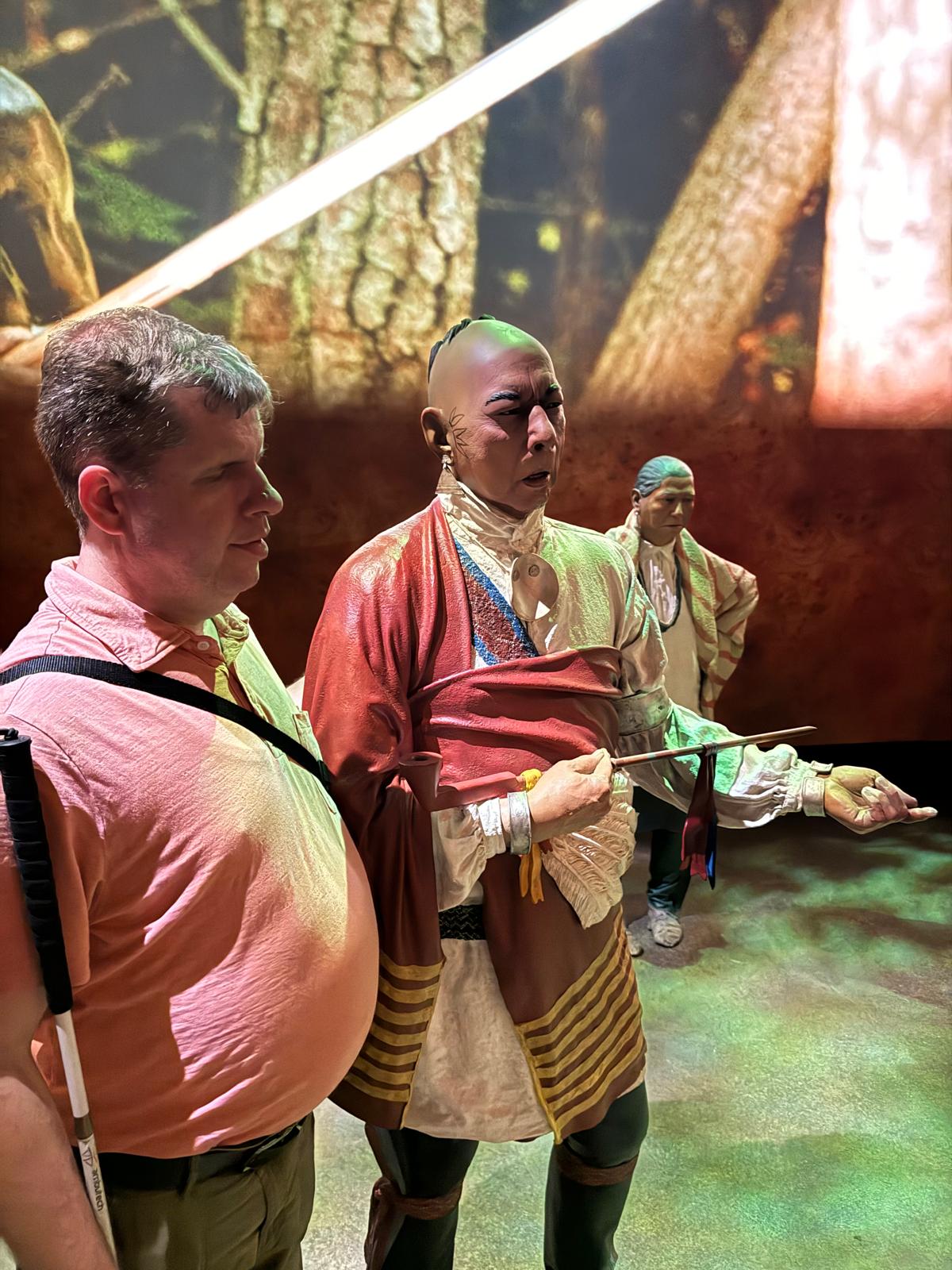
One of the first things we touched is an approximately life size tactile painting of King George III. Throughout the tour we also had a chance to touch tactile graphics, maps, cannons, cannonballs or bullet pouches.
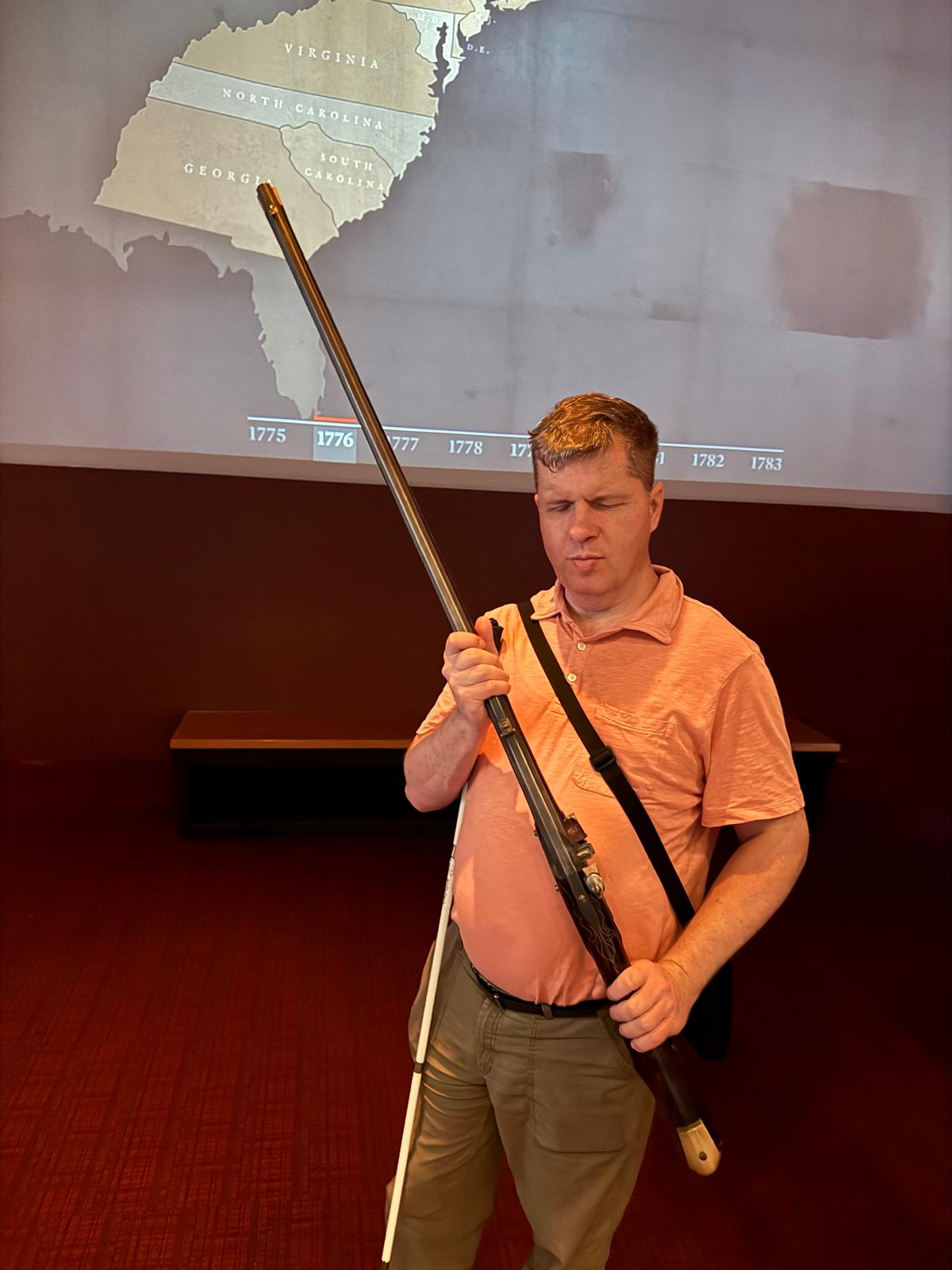
One of my favorites was the exact replica of a musket from the 1700’s, which is a functioning one, we learned about how it works, of course the bullet samples did not have real powder.
For other sensory experiences, we could smell tea, tobacco from the era, or a rope used on a ship.
One of the most popular objects at the exhibit is the tent of George Washington that the tour concludes with. People can watch a short movie about it and at the end you get to see the actual tent behind glass. For visually impaired visitors, a 3D printed replica is available which you can even download from the web site and print it for yourself if you have a 3D printer, but if not the Clovernook Center can help you get it into your hands.
We attended the guided tactile tour, which is available to all people, though it is requested that you schedule an appointment at least two weeks in advance.
However, there is also an audio described tour that visitors can follow independently. You can either run it on your phone or request an audio guide at the front desk. After our visit, I listened through the entire description which is available online for anyone.
The audio described self-guided tour does not only explain what you can see in the museum, but it gives you a detailed description on how to get from one station to the other independently, giving you count of steps or floor texture. One thing to keep in mind though is that you have to meticulously follow the instructions, because if you miss one turn, it maybe difficult to get back to your route, but with the detailed explanation it should not be difficult. Overall though, I would say that this is one of the most accessible and most useful audio described museum tour I have heard.
If you choose the self-guided audio described tour, at the front desk you can check out the tactile maps and graphics that your tour guide would show you otherwise.
One other thing to mention is that the museum has an amazing accessibility page. It does not only state what they do for accessibility, but they give you a thorough description of what to expect. Information is broken down to individual disabilities. Information is available about how to get there, parking, what to expect, what you can find, etc. It is one of the best accessibility pages I have ever read.
I would highly recommend visiting the Museum of American Revolution, and of course, I am adding it to my list of tactile museums.
Social Media
Communication
Bookmarking
Developer
Entertainment
Academic
Finance
Lifestyle
Tactile exhibits, accessibility audits, staff training. That’s my work. Let’s talk about yours.