Press "Enter" to skip to content

Tag: Tactile graphics

The Museum of the American Revolution in Philadelphia

I just returned from Philadelphia where I had an opportunity to attend an amazing tactile tour at the Museum of American Revolution. This exhibit overall talks to anyone, anywhere from kids who just hear about the revolution for the first time, or someone who is involved with US history.

We toured the museum with the team from the Clovernook Center who did much of the tactile objects for the museum. Our tour was led by Meg Bowersox, but a self-guided tour is also available, more about it later.

Leave a Comment

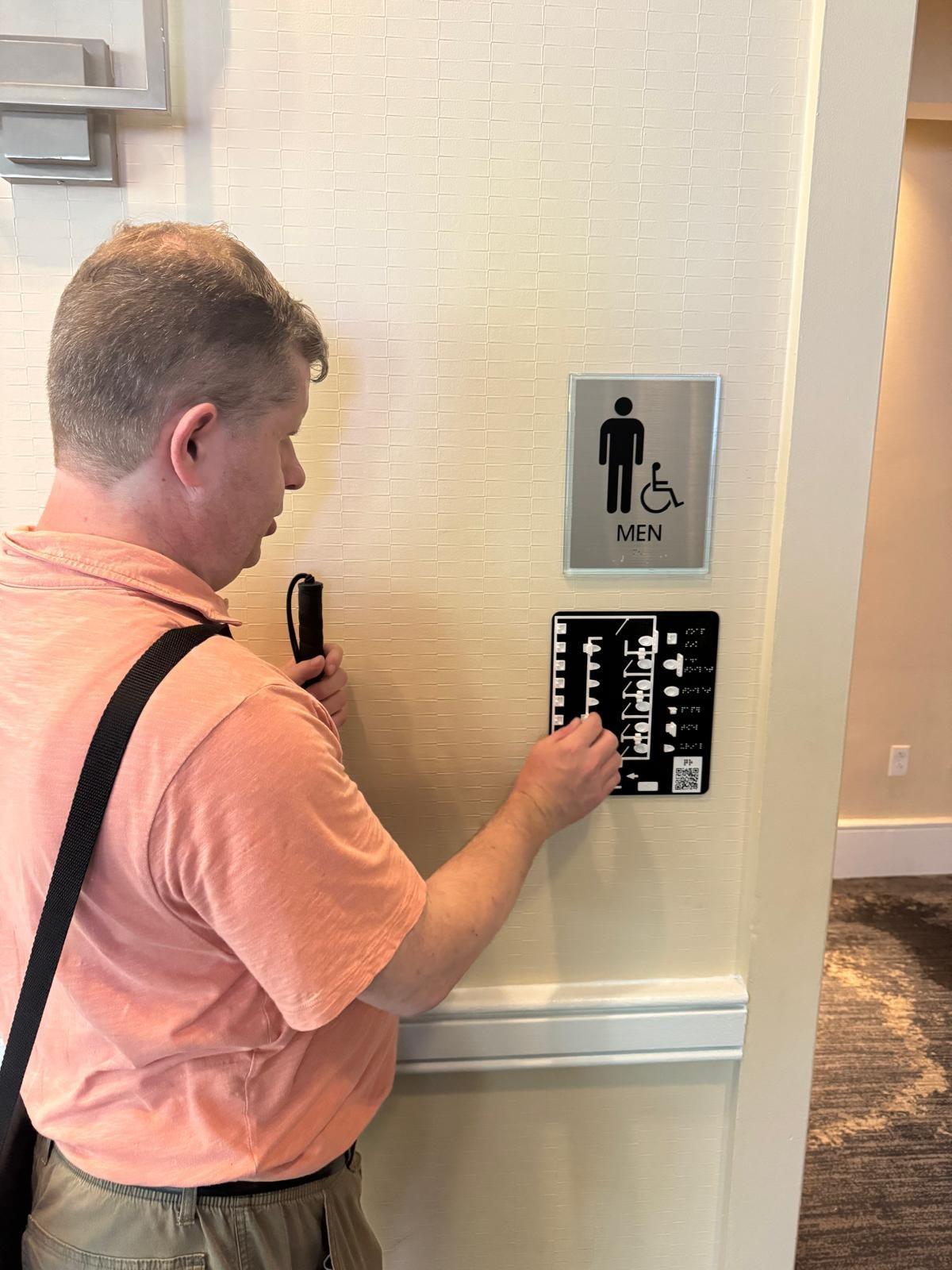
When 3D printing is preferrable to 2D tactile graphics

When supplying visual materials with braille books for the most part the use of tactile graphics is sufficient. However, there are many instances when providing 3D printed objects can enhance the understanding of the material. Even the Tactile Graphics Guidelines Mention 3-dimensional objects in the first sentence of the document: “Tactile graphics, in combination with 3-dimensional models, need to be introduced early in the process of learning braille.” Throughout this document 3-dimensional models are mentioned many times.

However, when it comes to practical implementation, rare are the books which are supplied with 3D objects. When I talked with many teachers of the visually impaired and with braille transcribers, their response was that while they are aware of the possibility of using 3D objects, but there is very little information on how to source these and what it really takes to get it produced.

In this post I will talk about what makes a good candidate for 3D printing and what is better supplied in 2D, or not at all. I will also look at the production process to help make the decision if 3D representation is indeed the right option for a particular object.
Leave a Comment

Tactile Learning: The Role of 3D Printed Objects in Education for the Blind

From textbooks and graphical illustrations to screens, it is clear that visual aids have always held massive importance in the sphere of education. It is much more difficult for students who are visually impaired to access the same level of information as their counterparts. Learning tools such as embossed graphics or Braille materials provide some assistance. Still, they often lack the specific required details and versatility that would be able to ensure a comprehensive understanding of the subject.

Leave a Comment