Home » Archives for Tom » Page 7
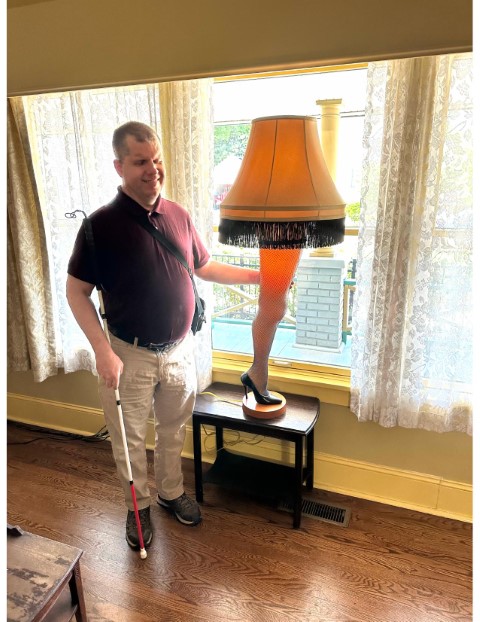
As I am always out searching for interesting museums, recently I found out that the house where the movie, “A Christmas Story” was filmed, at least parts of it, is open to the public. Not only, but there is also a museum and gift store next door. I couldn’t believe that it is 20 minutes from us and I didn’t even know about it. Last weekend I called an Uber and went to check it for myself.
For years I wanted to attend an invisible dinner, also called dinner in the dark, but either there wasn’t one nearby or I didn’t have time. But now I came across one in Kaposvár, which is in southwestern Hungary, right where one of my best friends lives. I thought I’d ask if he would like to have dinner and tell me all about his experience. I’ve been to one of these dinners before and read a lot about it, but I was curious about it from the perspective of sighted people. It turns out that my friend János has been to this event several times in the past, and he can tell me enough about it so that we can write this interview without participating. János is completely blind, but he talked so much with the participants so he had the answer for all my questions. So I asked him to tell me about his experience.
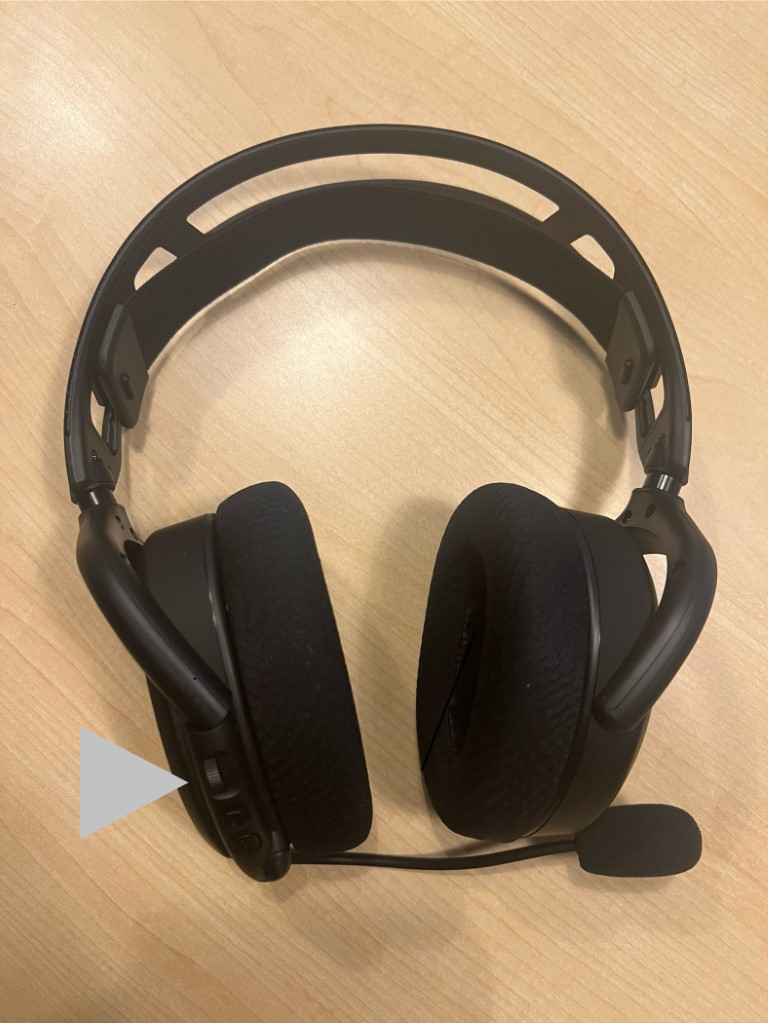
The other day I was searching for a headset which I could use for work and entertainment, when I came across the JVC gaming wireless GG-01W. This headset, with a few extra features, adds an extra layer of accessibility. This headset incorporates features which can be a game changer for people with visual impairment and for people with certain physical disabilities, however, these features can be useful for all.
Learning languages alone changed what I could get out of travel as a blind person. Being able to have conversations in another language, or knowing a few words in the local language truly changed my experience. Often, when sighted people can point at things, I am restricted to speaking. But it wasn’t without challenges. Even today when technology comes to the rescue, there still are challenges a blind person may have to face when learning a new language. But just like in so many cases, it doesn’t have to be that way. In a few instances the lack of vision can be a limitation, but in most it is the lack of accessibility.
But let me start with a personal story. When I studied at the Overbrook International Program in Philadelphia when I was sixteen, we had a chance to learn Japanese for a year.
I am always searching for innovative solutions to enhance the independence of visually impaired individuals. One such solution that has captured my attention many years ago was Touch Mapper, a service that allows the printing of local maps based on addresses. These tactile maps, designed for blind and visually impaired people, show roads, buildings, and bodies of water, with data sourced from OpenStreetMap. With my new 3D printer, it was finally time to put it to a test.
Last weekend I got myself a 3D printer. How does this relate to accessible travel? Because if I would like to understand what something looks like and I don’t have the opportunity to touch it, I can hopefully print out a model. I wrote about the 3d printed building project before, but that’s a different concept, where we are creating almost replica quality buildings. But sometimes, a good enough model that I can download from the net can give more information than nothing at all. My other motive was to work on more ideas and concepts for other blind people. I have many in mind, stay tuned.
Recently I came across a creative video description service for blind and visually impaired people. The description is text based, and meant to be used by listening to short segments of the video and reading the descriptions. This way it can have more context than an audio described video, while it is fully accessible for deaf blind users. One can request any YouTube videos to be described up to 15 minutes. This service is free of charge.
I asked Zsigmond Peter, the director of the Videó a Vakoknak Alapítvány, in English Video for the Blind Foundation to describe the project for my readers.
Recently I have come across a simple and practical system to tag objects for blind people, called WayAround. It has practically unlimited uses, and people are coming up with all kinds of innovative ways of making their lives easier. I was wondering if I could use it during my trips to simplify a few things.
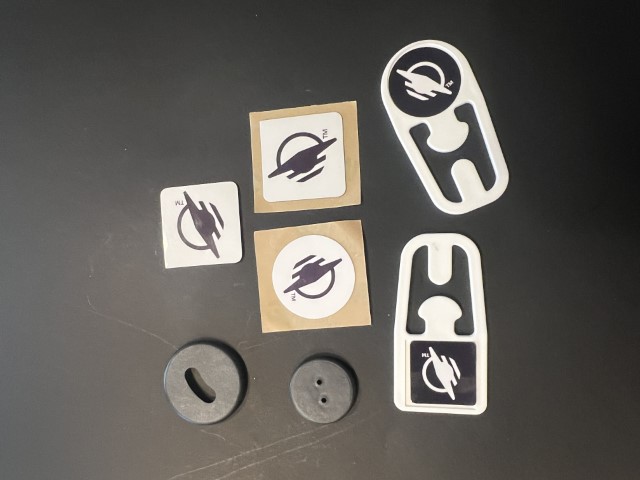
But first let me explain how it works. There are 7 different types of WayTags that you can attach to any objects. Then you take the WayAround phone app, touch the tag to the phone and add any text. With the same app, you can also read tags, you just touch it to the phone and it will read the text you recorded previously. The uses are unlimited, practically it is up to your creativity. People use it to label cans, spices, food containers, clothes, etc.
I will never forget how much more freedom I experienced all of a sudden when I got my guide dog, Baldwin from guiding eyes for the Blind. That was approximately the time when Guiding Eyes started to train running guides. This means that a blind or visually impaired person can take up running as a sport and do it independently with a guide dog. The white cane is not for running, it is simply dangerous.
One could ask, why not just run with a regular guide dog? After all dogs enjoy running. This is why it is not possible: a guide dog by default is trained to recognize and avoid obstacles at a walking speed. When one would run with a guide dog, practically it would ask the dog to do something she has never been trained to do. It would be confusing for the dog and dangerous for the blind person. During the training program, Guiding Eyes does ask dog handlers not to run with their dogs while guiding, unless the dog has been specifically trained for that. By default, Guiding Eyes does not train running guides, but anybody can request one.
Recently I wrote about my new 3d building project. Today I would like to talk about how it has changed my entire perception of what buildings are.
Unlike in most of my posts, I cannot talk about blind people in general, because each person is their own story and background and education. I can only talk about how it made a difference in my own personal life, but hopefully even through my own story some concepts will be useful for others when creating an experience for blind people, for example a tactile museum exhibit.