Press "Enter" to skip to content

Even Grounds Posts

Even Grounds offers holistic accessibility consulting for travel and tourism: tactile maps, 3D replicas, museum consulting, training, and accessibility audits.

My consulting services

Selected clients

Even Grounds is trusted by organizations of all sizes, from global corporations and government agencies to museums, cultural institutions, and nonprofits.

Dell
KPMG
Bank of Canada Currency Museum
U.S. Patent and Trademark Office
Allen Memorial Art Museum

The National Underground Railroad Freedom Center in Cincinnati

As I was planning my trip to Cincinnati, I came across the National Underground Railroad Freedom Center which sounded very exciting. I was wondering if there would be a touch tour available. When I checked the site, there was information about a tactile map and an audio tour, but I was looking for more. I contacted the museum, and James Harrington responded immediately offering to take me around.

The museum introduces visitors to the history of the underground railroad, starting from the African slave trade to arriving to the free states.

An additional surprise was that on the day of my visit, I was trying to figure out where to eat lunch before the visit, and I accidentally found out that a piece of the Berlin Wall can be seen right outside of the museum.

And how does the Berlin Wall belong there? As the Columbus Dispatch States, it “focuses on how Civil War era slaves reached freedom, and on freedom around the world”.

Leave a Comment

Visiting the National Building Museum

I was always interested in miniature buildings or building replicas. When I travel, I hear so much about the architecture, but it is hard to imagine it without actually seeing it. Thus, I always try to find a replica of a building I visited if there is one available. It is much more meaningful together with the description.

Recently when I planned a trip to Washington DC, I contacted the National Building Museum and asked if they would be able to give me a touch tour and show me some miniature buildings.

The team was very kind and they organized a meeting for me for the only free afternoon I had during my trip. Little did I know, the day couldn’t be more perfect, as it was the opening of the Mini Memories exhibit, which is a number of souvenir buildings from the David Weingarten collection.

Leave a Comment

Experience Art Differently: The Touch Tour at Cincinnati Art Museum

I heard about the accessibility program of the Cincinnati Art Museum from Sara Birkofer at the LEAD conference. She talked about the touch tours she organizes, I immediately knew I have to get there somehow. I went up to Sara after their presentation and asked her to include me on one of her tours. Spoiler alert, if this was the only thing I did in Cincinnati, it was already worth flying there.

We scheduled the tour on a day when the museum hosted an audio description workshop, but more about that later, first I’d like to talk about the touch tour.

Sara organizes these tours, and people are asked to schedule on about a month in advance. There is more information on their accessibility page.

Being an art exhibit, the museum doesn’t land itself well for a just walk in tactile tour. By default, there really isn’t anything to touch, or at least, one should not touch anything. Generally art museums are more difficult to make tactile.

Leave a Comment

What Makes an Accessible Environment?

I often hear the argument that making something accessible for blind people is not worth it, because there aren’t many blind people using it. My argument usually is that if it was accessible, you would have more blind people taking advantage of it. It is even more difficult when we don’t just make something accessible by fulfilling the minimum necessary requirement, but making the environment truly inclusive to blind people, where they don’t only get information, but they can enjoy something just like sighted people do. Often, this can cost much more time and money.

In this article I would like to show you why inclusion is worth it, and how it can benefit many other clients, not only blind people. I am sure you have heard the arguments that accessibility is the law and it is our social and moral responsibility. This is true, but I would like to show you that it actually makes business sense.

Leave a Comment

Leadership Exchange in Arts and Disability (LEAD)

Last month I attended the Leadership Exchange in Art and Disability (LEAD) conference in Boston, which was the most inclusive conference I have ever been to. And that’s to say a lot, because in the last 25 years, I have attended at least 40 conferences which primarily had an audience of people with disabilities, plus many other ones, and I have not experienced anything like this before.

The conference is organized by the Kennedy Center, and it is about cultural access solutions, allowing participants to learn, network and be inspired.

For full disclosure, I need to mention that I was invited to the accessibility committee of the conference.

When joining the accessibility committee, I was already impressed about how much thought they put into it. They invited people with different disabilities to contribute who are also outstanding accessibility experts.

Leave a Comment

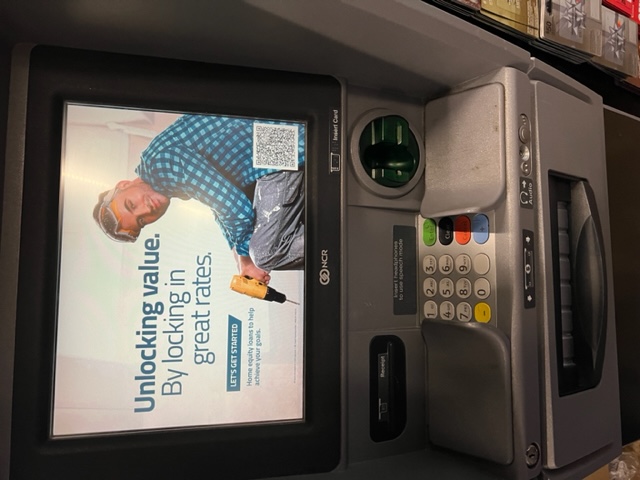
Why do drive-through ATMs have braille?

Drive-through ATMs with Braille buttons have long perplexed many, giving rise to questions, jokes, and urban legends. After all, blind individuals don’t drive, so why would there be Braille on machines explicitly designed for drivers? As it turns out, the presence of Braille is based on a combination of practical, legal, and manufacturing reasons. This article delves into the explanations behind this seemingly contradictory design choice.

ATM machine

Leave a Comment

First Blind Man to Complete Race Across America

Dave Wilkinson, a blind 30-time marathon runner and Ironman, is planning nothing less in 2024 but to join the Race Across America bicycle race event. He will ride on a tandem bike with Jim Trout who has done this race several times before. They will ride 3000 miles in 12 days, across 12 states.
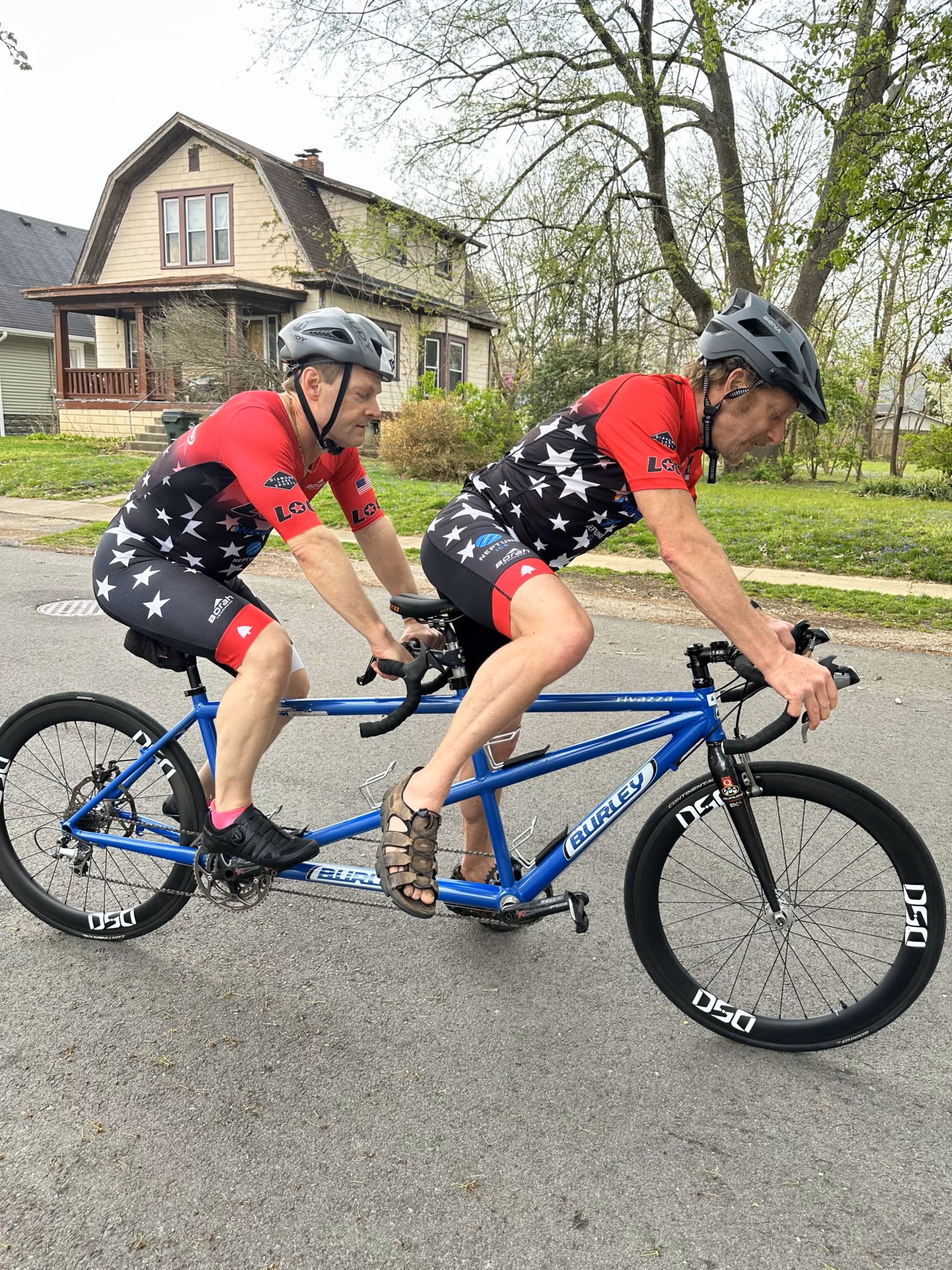
Dave and his tandem captain jim riding on a road

I have known of Dave over the years, and he was famous about testing the limits of what people can do, blind or sighted. But after a car crash in 2017, he needed to rethink his life and recover physically and mentally. And his way to cope was to do something even bigger, this is how he started training for Ironman and now for the Race Across America.

Dave explained to me that in his view, blindness should not hold him back from things which are traditionally thought of something that blind people are not active in. And this alone, if made him a high achiever that would already be impressive. But he has a much bigger vision in mind. He wants to provide motivation to other blind people to not be stuck inside the conventional ways. His dream is that there will be people who will do even better.

But of course there is much more to it. It is not just the courage to do it without vision. Many sports will have to be adopted to the situation, and preparation will also have its challenges. This is what makes it even more difficult, but not at all less impossible for blind people.


Leave a Comment

Should I Add Braille to My Business Card?

In an increasingly inclusive business landscape, the question of whether to add braille to business cards has become relevant for many professionals. While a significant portion of the global population won’t directly benefit from braille business cards, their importance extends beyond the visually impaired community. As businesses strive to stand out, resonate more deeply with their audience, and showcase corporate responsibility, braille cards serve as a symbol of commitment to inclusivity. But for those who read braille, it is not just a useful tool, but a lasting impression on you and your company.

Leave a Comment

Accessible Ohio, Making Ohio Destinations More Inclusive to All

Recently I have come across a program in Ohio, which may fundamentally change what it means to create accessible travel and tourism in a state. Accessible Ohio has the potential to impact accessible experiences for people with disabilities by educating and consulting with companies who would like to make their services more accessible and inclusive. Of course, such services existed before, but here the difference is that it is taken to the state level, and actually funds accessibility consultations. As I understand, such an initiative is unique in the United States.

Leave a Comment