Press "Enter" to skip to content

Even Grounds Posts

Even Grounds offers holistic accessibility consulting for travel and tourism: tactile maps, 3D replicas, museum consulting, training, and accessibility audits.

My consulting services

Selected clients

Even Grounds is trusted by organizations of all sizes, from global corporations and government agencies to museums, cultural institutions, and nonprofits.

Dell
KPMG
Bank of Canada Currency Museum
U.S. Patent and Trademark Office
Allen Memorial Art Museum

Accessible Social by Alexa Heinrich, Book Review

I have come across a book that is a true gap filler in the industry:

Accessible Social

A beginner’s guide to creating inclusive social media content, by Alexa Heinrich

Why am I writing about this on a travel blog? Because it is a must read, or must use for people who use social media in the travel industry. For that matter, for anybody who uses social media in general, regardless of whether a casual Facebook user, or a marketing specialist.

Over the years, the author, Alexa Heinrich has emerged to be the absolute authority in social media accessibility in the industry. I had the honor of hosting her at one of my meetups. She not only creates great content, but often challenges industry practices.

Leave a Comment

Accessible Exhibit at the Allen Memorial Art Museum in Oberlin

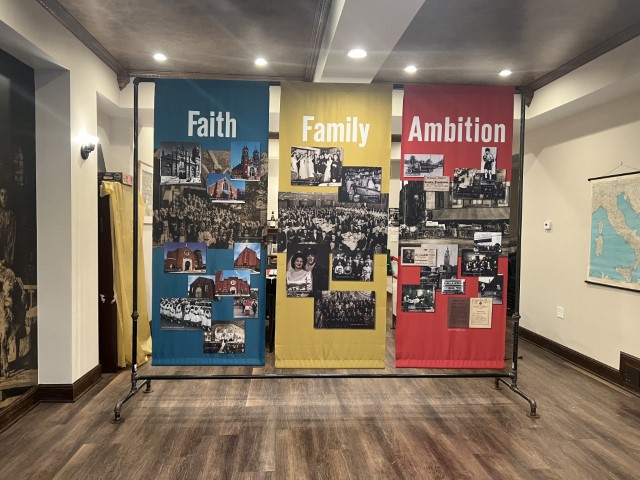
Last summer I was introduced to Ellis Lane, a curator from the Allen Memorial Art Museum in Oberlin. At the time he just started working on a project to make artwork accessible for visually impaired people. The Digital Reimaginings exhibit opened recently. Ellis didn’t only create a fully accessible program, but I really appreciated his approach to it, where I had the honor to collaborate with him.

As he was putting the exhibit together, he continuously solicited feedback from visually impaired people in the form of online and on-site focus groups. This is particularly important because he took the surprise factor out of the equation, and put something together that he had feedback on. It is important to note that though the original idea was to create something particularly for visually impaired people, he also ensured accessibility and inclusion for all people, with our without disabilities.

The exhibit consists of a few objects spanning centuries and different parts of the world. Given that the original artworks should not be touched by all visitors, he created 3d printed replicas. Besides the replicas, he also designed some lithophanes showing different aspects of the use of one of the artifacts.

The exhibit can be viewed alone, or guidance can be requested as well. By each object there is a large print and a braille description, together with an audio guide, so guests can take the approach that best fits their needs.


Leave a Comment

Difference Between the Accessibility Page and the Accessibility Statement

Introduction

There is often much confusion about how to write an accessibility statement or how is it different from your organization’s accessibility page. While there aren’t any rules set in stone, and ultimately you need to create these documents to serve your organization’s needs, generally there is room for both. They each serve a different purpose. In this article I will show you how to approach the two documents.

1 Comment

Designing an inclusive and accessible alarm clock

Let’s play a design game. The task is to come up with the most accessible, most inclusive alarm clock.

I used to give this task to my classes when I was teaching at IBM, and we had the most thought provoking conversations.

There are no good or bad ideas here. But consider that the more inclusive you make it, the more features you add, the more expensive it will get, at some point it will be unreasonable. But the more you compromise on features, the less people will be able to use it.

Let me set one more rule here, it is a standalone clock. Anything it can do it is part of the clock you design. Otherwise, it would be easy to say that you will just connect to it using your phone and an app, which probably would be your most inclusive solution.

Leave a Comment

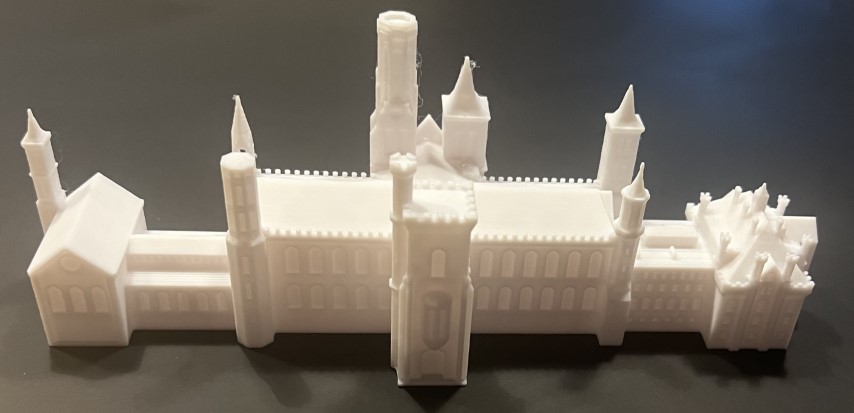
Miniature 3d printed buildings for blind people

Miniature 3d buildings for blind people

It has always fascinated me how to explain what a building looks like to a blind person. But as they say that a picture is worth a thousand words, a tactile experience is also definitely more accurate than a thousand words. For that matter, the two together is the best approach.

Since I couldn’t find a resource where I could get the models of 3d buildings, I created my own.

Smithsonian Castle

2 Comments

The Country of the Blind by Andrew Leland, book review

Andrew Leland, a journalist, audio producer, editor and professor, in “The Country of the Blind” writes about how he gradually lost his vision due to retinitis pigmentosa. But this book is much more than his story. One can view it as a history book about blindness and blind people.

Andrew Leland takes the reader through how he practically lost his eye sight starting in fifth grade when he noticed that he didn’t see as well as his friends to today, when his field of vision is so narrow that he practically needs to do things the blind way. As he narrates his story, in each chapter he looks at different issues related to blindness and provides a very well-researched overview of all topics. After reading the book, I felt that I knew the facts, but now I understand the stories and the reasons behind them.

Leave a Comment

Your Museum is Not Yet Accessible: What Can You Do?

Introduction

As I described earlier, a museum’s accessibility is not a true or false, for that matter, it never will be, but it is a continuous progress towards inclusion and exceptional accessibility. But if you feel that your museum could be more accessible, there is quite a bit you can do. It will not be an overnight process, but there is a lot you can do right now, practically at no or minimal cost to get started.

Leave a Comment

How to Design Museums That Cater to the Blind

Introduction

When planning a visit to a museum, one crucial question is often in the minds of many people with disabilities: Is this museum accessible? The significance of this question cannot be overstated. If a museum isn’t accessible, visiting it could turn out to be a frustrating, if not entirely wasted, experience. Conversely, if it is accessible but this information isn’t readily available, potential visitors might miss out on a wonderful opportunity.

It’s essential to understand that the accessibility of a museum is not a simple ‘yes’ or ‘no’ matter. Most museums fall somewhere in between.

Leave a Comment

The Canadian Museum of History

After I was done with my work in Ottawa, I only had time to visit one thing before my flight. There is so much to pick from, I chose the Canadian Museum of History, but I would like to return, preferably in warmer weather. Each time I go to Ottawa, Cleveland reminds me of tropical vacation spots. Anyway, this time I didn’t prepare early, and I only started to schedule my visit two weeks before my trip, so at this point, I decided that I’ll be happy with anything, if I can’t get something organized, it is my fault. After all, I can always just walk in, buy a ticket and hope for the best. But that’s really the last option. I like to make sure that if I only have a few hours, I plan it and spend my time meaningfully.

I checked the museum’s accessibility page, but nothing really indicated that there is anything for blind people to do. Generally, there is always something, well, except when there isn’t so I like to make sure I won’t just walk by rows of glass containers. For more information, they suggested to use the contact form or call a number. I started with the contact form, it wasn’t too obvious what to pick, the two best options were general information or accessibility plan. I picked the second, and sent a message.

2 Comments