I have been working in accessibility for the last 25 years. I have helped government agencies, corporations and non-profit organizations to become accessible. Over the years I taught over 20000 people about accessibility.
Showing faces to blind people has been a challenge I have been trying to research and resolve for many years. When a face is transferred into a 2D or a 3D form and features are made so that the are enjoyable through a tactile experience, a lot is lost that is still available when looking at a live human, or a photo.
While there are many tactile representations of people, there is much less information about how recognizable those pictures, statues or 3D replicas are.
I just returned from Philadelphia where I had an opportunity to attend an amazing tactile tour at the Museum of American Revolution. This exhibit overall talks to anyone, anywhere from kids who just hear about the revolution for the first time, or someone who is involved with US history.
We toured the museum with the team from the Clovernook Center who did much of the tactile objects for the museum. Our tour was led by Meg Bowersox, but a self-guided tour is also available, more about it later.
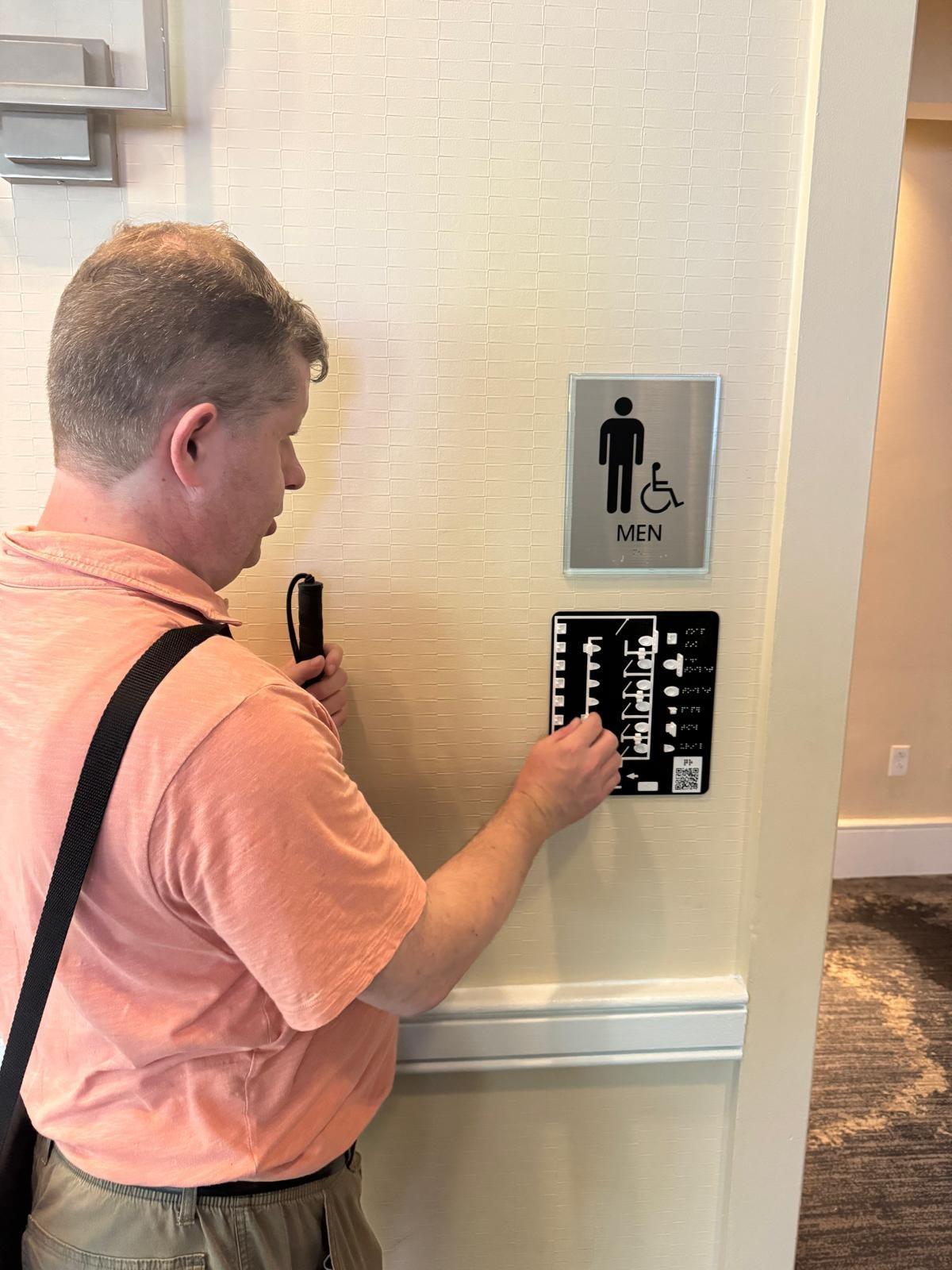
A tactile map is a map designed to be read by touch: spatial relationships translated into a form the fingertips can read. Raised lines, textures, shapes, and braille labels do the work that printed lines and colors do on a visual map.
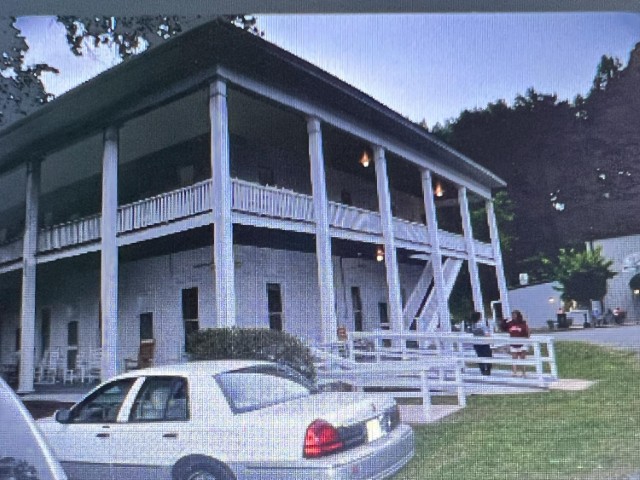
Sometimes our accessible 3D design does more than accessible replicas. Recently we have rebuilt the Donoho hotel that was lost in a fire accident in 2025.
Over the last couple of years, Even Grounds has been working on a very rewarding project with the Clovernook Center for the Blind and Visually Impaired. We are creating 3D printed tactile objects for schools for the blind around to world to help the teaching of biology.
The way this program works is that they build relationships with schools for the blind from around the world, ship 3D printers and printing materials to them, together with 3D design files. This way, at a much lower cost than sending each piece individually, schools can print and distribute their materials locally.
On Friday, June 12, 2026 Mark Zuckerberg announced a donation of approximately 130000 Meta Ray-Ban glasses to blind veterans. The goal is to provide each blinded veteran with one in the United States. This does not mean that they will now start mailing one out to each eligible person. Rather, people who can prove eligibility will be able to request one from the Blinded Veterans Organization or from any of their partners. Most likely over the next few days we are going to receive more information.
In the first chapter I gave you a few examples of what an accessibility committee can do. We will expand that in greater detail later, but for now, let’s talk about why it is relevant.
In a nutshell, I would say that the accessibility committee is the bridge between what is now and what is ideal. But it is not a real bridge, maybe a path rather, because the ideal is a moving target and if things are done well, the what is now is also changing dynamically. Therefore, it is not just the matter of crossing the bridge, rather, it is about always aiming at the direction where we want to be while it changes over time.
I think you will read many more times in this guide that it depends, or each organization is different. But let me give you some ideas about who should participate in an accessibility committee. For now I won’t worry much about the size of the committee, as it will have to be its own discussion.
The following is the first part of a longer series I am planning to write about accessibility committees. In this first part I will explain what it is.
However, before I get started, if we haven’t met each other yet, you may wonder what qualifies me to write about the topic.
I would like to introduce my friend of 20 years, Julius Charles Serrano, a coach, speaker, accessibility consultant and an adventurer.
We met in person the first and only time in Malaysia in 2008, when I taught the first group of blind people in South-East Asia to become accessibility consultants. Since then we worked together on many projects. Julius now lives in New Zealand.
Each time we talk he tells me about an adventure I admit I get the shivers in my spine just to hear about it. He likes heights, jumps, out of the box ideas and experiences which he relates with the coaching and consulting work he does. I thought he would be a great person for my readers to meet. The following is an interview with Julius.