
Yesterday I attended an art exhibit done by the Clovernook Center for the Blind and Visually Impaired that was so special to me. The exhibit is called Tactile Revolution, where people are invited to touch different tactile designs, braille and 3D models.
The reason why I was there is because many of the objects, about more than two dozens which are exhibited were done by my company.
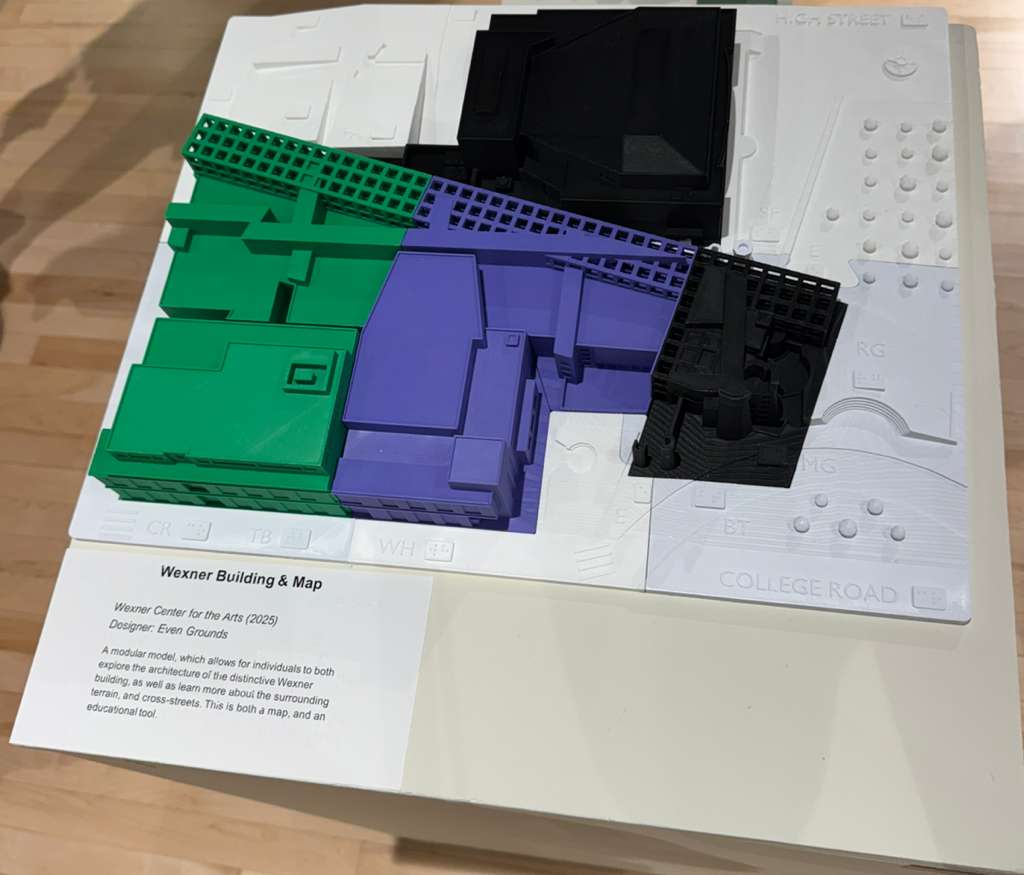
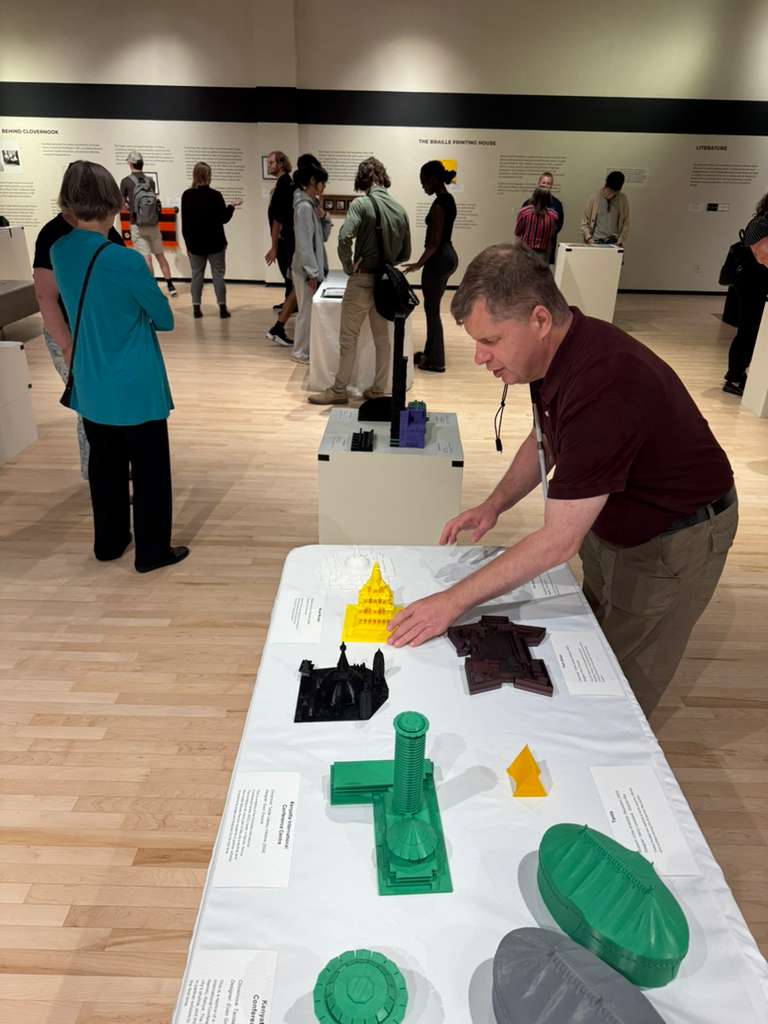
Imagine this as any other art exhibit, in a large gallery you can walk around and examine objects which are used by blind people to better understand the world, let that be art, buildings, maps, or even educational tools. But most of the objects are 3D printed, and under each object, you can read the description with braille and large print.

In this case, people are actually encouraged to interact with the objects by touch. Because what is relevant for blind and visually impaired people to feel, it could also be a more inclusive experience for all people of all ages. Touch is by no means limited to anybody.
The pieces exhibited were made mostly over the last few years, but you could even find magazines which were made with braille by Clovernook a hundred years ago.
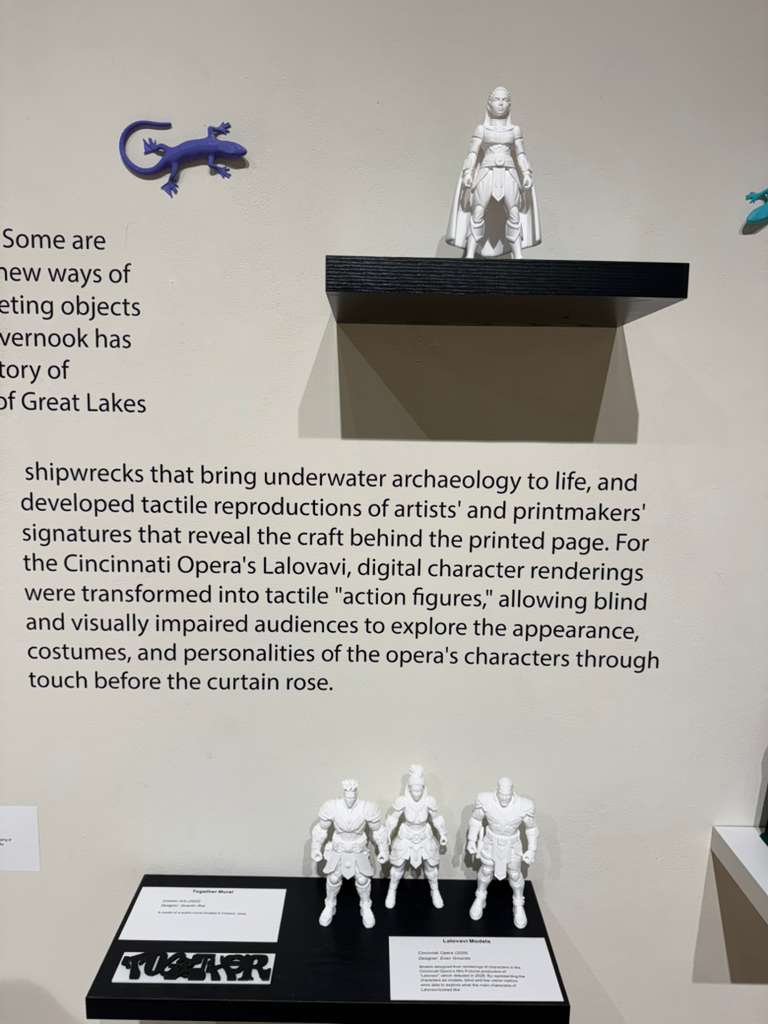
The reason why I was there, is actually twofold: if I hear about a tactile exhibit, I just need to be there, no matter how far it is. But even more importantly, I was collaborating with Clovernook over the last few years designing many of the objects, such as maps, biology tools, realistic animals or building replicas to mention a few. As we worked together over the years, we created one object at a time. But after all this work, it was wonderful to see it all together, I myself was amazed how much work we got done, and how much we have impacted the education of blind people, especially in East Africa, but many of our objects are exhibited in museums all around the United States.
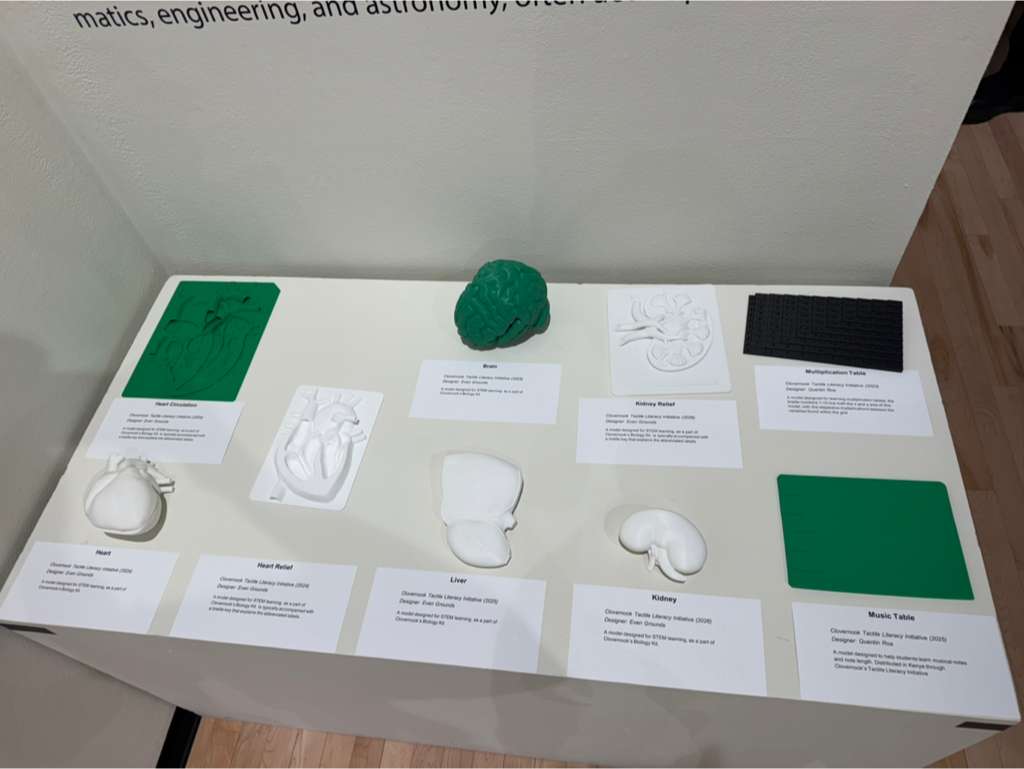
Another component of the exhibit is the work of the Northern Kentucky University students, who also created 3D printed accessible products and tools. It is fantastic to know that accessible 3D design is taught and encouraged.
Though not part of the actual exhibit, but to help visually impaired visitors, the restrooms also had a tactile map.
The opening of the exhibit took place yesterday, but it will be available until September 17th.
No comments! Be the first commenter?