It was a long time dream coming true to visit the Typhlological Museum in Madrid, Museo Tiflológico, a museum for and about blind and visually impaired people. The occasion was that we were speaking at the Inclusive Museum conference in Zaragoza. My options were to fly through Barcelona or Madrid, so I picked Madrid to be able to visit this museum.
Leave a CommentTag: Touch Tour
Last week I was in Amsterdam attending the third Tactile Reading and Graphics Conference. As always when I travel, I try to squeeze in at least a museum visit. This time, it was the Rijksmuseum, for several reasons. One that it was already recommended to me as an accessible experience, but even more importantly because one of the keynote speakers, Cathelijne Denekamp, who is their accessibility manager wrote a book about their accessibility work, Accessibility without limits. I read the book before my trip and I was really impressed. I quickly bought a ticket for a Sunday morning to explore the museum on my own. I read in the book that it is set up so that a person without any vision and a phone could navigate the property and enjoy the exhibit.
Leave a CommentDiversiGO is a city tour company offering tours for everyone, particularly for people with disabilities. Last time I was in Budapest, I scheduled a tour with them.
Leave a Comment
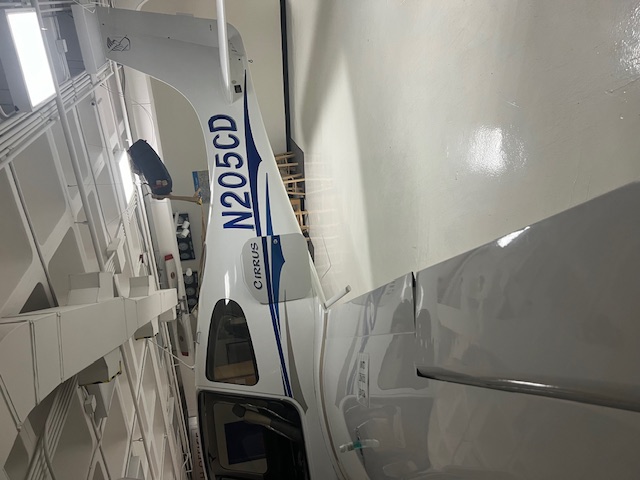
When I learned that the 2024 LEAD conference is taking place in Seattle, I had no doubt that I wanted to visit the museum of flight. But there was only one challenge: their approximately biweekly scheduled tours for blind and visually impaired people were not during the week of the conference. I made a reservation for one of the events, and explained in the notes section that I was attending an accessibility conference and was wondering if we could make an exception for a special tour. Though there was a bit of a communication mishap, the docent supervisor, Brenda Mandt who was also at the conference, even attended my presentation, made the tour happen for me. And it wasn’t a small achievement, because my one and only free afternoon was on August 3rd, when the Jet Blast Bash took place, the absolute most busy day at the museum. But Brenda took the time to set it up for me, and even emailed me instructions on how to get into the museum because of the temporary closure.
2 CommentsLast summer I was introduced to Ellis Lane, a curator from the Allen Memorial Art Museum in Oberlin. At the time he just started working on a project to make artwork accessible for visually impaired people. The Digital Reimaginings exhibit opened recently. Ellis didn’t only create a fully accessible program, but I really appreciated his approach to it, where I had the honor to collaborate with him.
As he was putting the exhibit together, he continuously solicited feedback from visually impaired people in the form of online and on-site focus groups. This is particularly important because he took the surprise factor out of the equation, and put something together that he had feedback on. It is important to note that though the original idea was to create something particularly for visually impaired people, he also ensured accessibility and inclusion for all people, with our without disabilities.
The exhibit consists of a few objects spanning centuries and different parts of the world. Given that the original artworks should not be touched by all visitors, he created 3d printed replicas. Besides the replicas, he also designed some lithophanes showing different aspects of the use of one of the artifacts.
The exhibit can be viewed alone, or guidance can be requested as well. By each object there is a large print and a braille description, together with an audio guide, so guests can take the approach that best fits their needs.
Leave a CommentAfter I was done with my work in Ottawa, I only had time to visit one thing before my flight. There is so much to pick from, I chose the Canadian Museum of History, but I would like to return, preferably in warmer weather. Each time I go to Ottawa, Cleveland reminds me of tropical vacation spots. Anyway, this time I didn’t prepare early, and I only started to schedule my visit two weeks before my trip, so at this point, I decided that I’ll be happy with anything, if I can’t get something organized, it is my fault. After all, I can always just walk in, buy a ticket and hope for the best. But that’s really the last option. I like to make sure that if I only have a few hours, I plan it and spend my time meaningfully.
I checked the museum’s accessibility page, but nothing really indicated that there is anything for blind people to do. Generally, there is always something, well, except when there isn’t so I like to make sure I won’t just walk by rows of glass containers. For more information, they suggested to use the contact form or call a number. I started with the contact form, it wasn’t too obvious what to pick, the two best options were general information or accessibility plan. I picked the second, and sent a message.
2 CommentsI was always interested in miniature buildings or building replicas. When I travel, I hear so much about the architecture, but it is hard to imagine it without actually seeing it. Thus, I always try to find a replica of a building I visited if there is one available. It is much more meaningful together with the description.
Recently when I planned a trip to Washington DC, I contacted the National Building Museum and asked if they would be able to give me a touch tour and show me some miniature buildings.
The team was very kind and they organized a meeting for me for the only free afternoon I had during my trip. Little did I know, the day couldn’t be more perfect, as it was the opening of the Mini Memories exhibit, which is a number of souvenir buildings from the David Weingarten collection.
Leave a CommentI heard about the accessibility program of the Cincinnati Art Museum from Sara Birkofer at the LEAD conference. She talked about the touch tours she organizes, I immediately knew I have to get there somehow. I went up to Sara after their presentation and asked her to include me on one of her tours. Spoiler alert, if this was the only thing I did in Cincinnati, it was already worth flying there.
We scheduled the tour on a day when the museum hosted an audio description workshop, but more about that later, first I’d like to talk about the touch tour.
Sara organizes these tours, and people are asked to schedule on about a month in advance. There is more information on their accessibility page.
Being an art exhibit, the museum doesn’t land itself well for a just walk in tactile tour. By default, there really isn’t anything to touch, or at least, one should not touch anything. Generally art museums are more difficult to make tactile.
Leave a CommentGenerally, most museums are not regarded as beneficial for blind people, particularly because often objects are behind glass. But it doesn’t have to be that way, and museums can be a fascinating experience. However, most exhibits will need some kind of adaptation to make them enjoyable for blind people.
Leave a Comment