When creating accessible 3D printed buildings for visually impaired people, the first thing that comes to mind is let’s make it small enough to handle, but large enough to feel the important details. But let’s expand on this a little bit, because in practice there is so much more complexity to it.
Leave a CommentTag: Museum
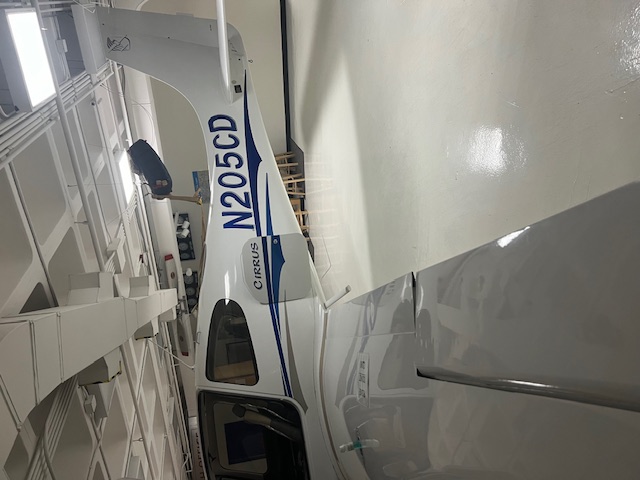
When I learned that the 2024 LEAD conference is taking place in Seattle, I had no doubt that I wanted to visit the museum of flight. But there was only one challenge: their approximately biweekly scheduled tours for blind and visually impaired people were not during the week of the conference. I made a reservation for one of the events, and explained in the notes section that I was attending an accessibility conference and was wondering if we could make an exception for a special tour. Though there was a bit of a communication mishap, the docent supervisor, Brenda Mandt who was also at the conference, even attended my presentation, made the tour happen for me. And it wasn’t a small achievement, because my one and only free afternoon was on August 3rd, when the Jet Blast Bash took place, the absolute most busy day at the museum. But Brenda took the time to set it up for me, and even emailed me instructions on how to get into the museum because of the temporary closure.
2 CommentsAudio guides can be used in several environments, and if they are structured well, they can provide immense help for visitors. A few ideas where audio guides can be used are:
- Museums and galleries
- City tours
- Parks
- Zoos and aquariums
- Botanical gardens
However, I have experienced many instances when otherwise good audio guides did not fulfill their promise and created a less than desirable experience, either because they had a conflicting message on the target audience, or they did not properly serve the people they meant to help.
When you implement an audio guide, it is worth considering the needs of your target audience, and it is a good idea to test it with a focus group.
Leave a CommentLast summer I was introduced to Ellis Lane, a curator from the Allen Memorial Art Museum in Oberlin. At the time he just started working on a project to make artwork accessible for visually impaired people. The Digital Reimaginings exhibit opened recently. Ellis didn’t only create a fully accessible program, but I really appreciated his approach to it, where I had the honor to collaborate with him.
As he was putting the exhibit together, he continuously solicited feedback from visually impaired people in the form of online and on-site focus groups. This is particularly important because he took the surprise factor out of the equation, and put something together that he had feedback on. It is important to note that though the original idea was to create something particularly for visually impaired people, he also ensured accessibility and inclusion for all people, with our without disabilities.
The exhibit consists of a few objects spanning centuries and different parts of the world. Given that the original artworks should not be touched by all visitors, he created 3d printed replicas. Besides the replicas, he also designed some lithophanes showing different aspects of the use of one of the artifacts.
The exhibit can be viewed alone, or guidance can be requested as well. By each object there is a large print and a braille description, together with an audio guide, so guests can take the approach that best fits their needs.
Leave a CommentAs I was planning my trip to Cincinnati, I came across the National Underground Railroad Freedom Center which sounded very exciting. I was wondering if there would be a touch tour available. When I checked the site, there was information about a tactile map and an audio tour, but I was looking for more. I contacted the museum, and James Harrington responded immediately offering to take me around.
The museum introduces visitors to the history of the underground railroad, starting from the African slave trade to arriving to the free states.
An additional surprise was that on the day of my visit, I was trying to figure out where to eat lunch before the visit, and I accidentally found out that a piece of the Berlin Wall can be seen right outside of the museum.
And how does the Berlin Wall belong there? As the Columbus Dispatch States, it “focuses on how Civil War era slaves reached freedom, and on freedom around the world”.
Leave a CommentI often hear the argument that making something accessible for blind people is not worth it, because there aren’t many blind people using it. My argument usually is that if it was accessible, you would have more blind people taking advantage of it. It is even more difficult when we don’t just make something accessible by fulfilling the minimum necessary requirement, but making the environment truly inclusive to blind people, where they don’t only get information, but they can enjoy something just like sighted people do. Often, this can cost much more time and money.
In this article I would like to show you why inclusion is worth it, and how it can benefit many other clients, not only blind people. I am sure you have heard the arguments that accessibility is the law and it is our social and moral responsibility. This is true, but I would like to show you that it actually makes business sense.
Leave a Comment