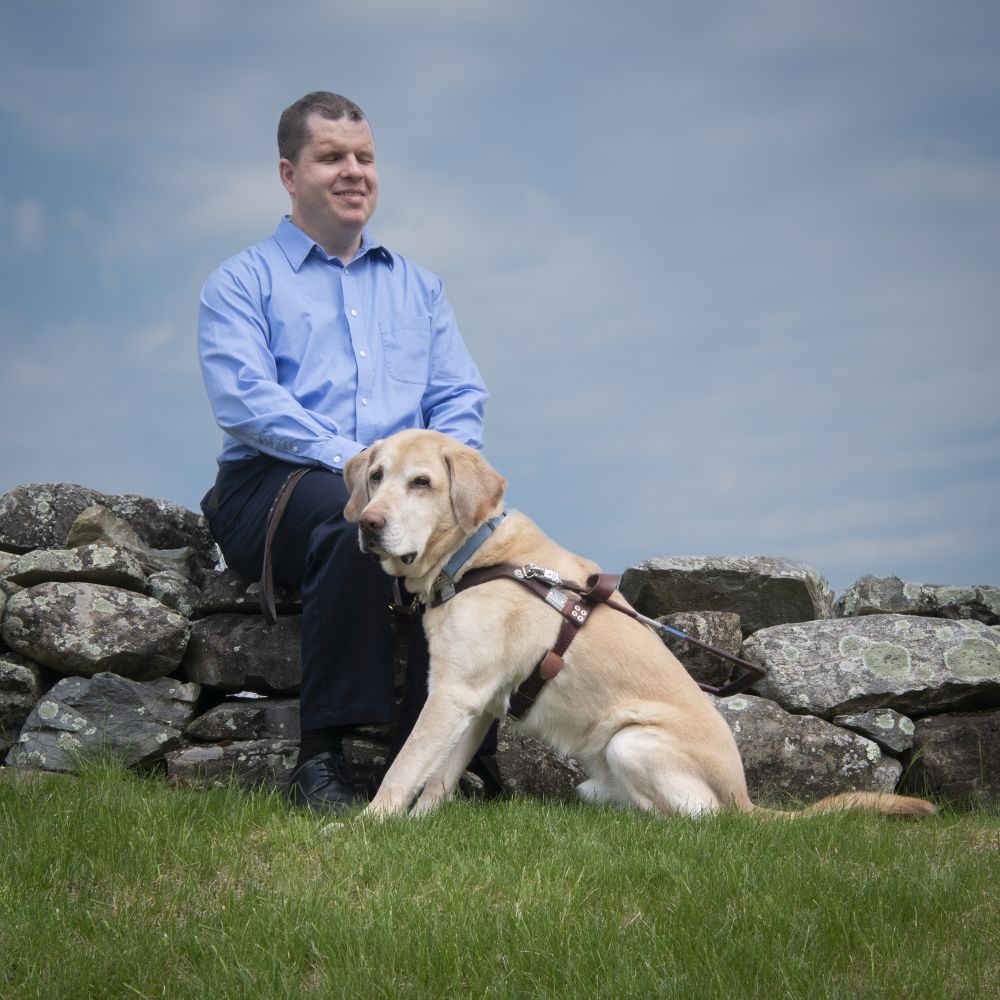
In person-centered learning, communication, alongside access to information, is important for education, employment, and day-to-day life activities, especially for people with visual impairment. Accessibility has been improved over the years with the development of technology, with the biggest focus being placed on Braille and audio aids. But which one is better? The effectiveness of these aids is discussed and analyzed in regard to their benefits, limitations, and best use cases.
Leave a CommentAuthor: Tom
I have been working in accessibility for the last 25 years. I have helped government agencies, corporations and non-profit organizations to become accessible. Over the years I taught over 20000 people about accessibility.
During the time of technological advancements, one main concern remains at the forefront: enabling ease of communication for the disabled, especially those who are visually impaired. With the rise of AI-integrated devices, voice-operated machines, and accessibility software, visually impaired people can now move around the world with much more ease.
This article talks about how automated devices are changing the way blind people communicate, enabling them to achieve higher degrees of independence.
Leave a CommentMaking Accessibility Tangible: Our New
Braille Production Services announcement
Launch May 1, 2025
At Even Grounds, accessibility isn’t an add-on — it’s at the heart of what we do.
That’s why we are proud to announce the launch of our Braille Production Services, officially available starting May 1, 2025.
What differentiates us from other similar companies is that we are leveraging our 3D design and production services, offering 2D tactile design to create exactly what makes life most accessible to your
clients.
Last year I had the honors to set up the accessibility committee for the Ohio Museums Association conference, which took place last weekend in Athens, Ohio. It is a conference that is not about accessibility, yet it values accessibility, and had an entire accessibility track among the presentations. Each time I work with OMA or take advantage of the services they provide, without an exception it comes across that it is there for all people, meeting their needs as much as possible.
2 CommentsSince I have posted about Touch Mapper, I got many questions if there is an alternative for this product. The short answer is not really, but in this post, let me explain what could be the problem for those who are seeking an alternative.
Leave a CommentLike every component of an organization, meetings serve a central purpose. It brings people together to discuss, strategize, and execute. Nonetheless, meetings that are not crafted with inclusivity in focus can leave out critical viewpoints and disengage the audience. The purpose of making meetings inclusive is to ensure that all participants in a meeting, regardless of their ability or background, actively participate and contribute.
Leave a CommentOver the years, technology has improved inclusivity for people with disabilities. One of the most notable inventions in recent years is 3D printing. This revolutionary technology is changing the lives of the blind and visually impaired by making assistive devices, Braille, and other aids for touch-based learning materials more easily and affordably. This, in turn, makes education, movement, and other daily tasks more accessible.
Leave a CommentFrom textbooks and graphical illustrations to screens, it is clear that visual aids have always held massive importance in the sphere of education. It is much more difficult for students who are visually impaired to access the same level of information as their counterparts. Learning tools such as embossed graphics or Braille materials provide some assistance. Still, they often lack the specific required details and versatility that would be able to ensure a comprehensive understanding of the subject.
Leave a CommentIf you are curious about the work involved in tandem with a guide dog, I would ask that you take a seat. I wish to explain my story—the lessons I’ve learned, the passions I’ve pursued, and the hurdles I’ve had to overcome. It’s quite intimate, and while no story is identical, I hope it connects with you in some fashion.