Most kiosk purchases start the same way. You go and see a kiosk working. Maybe it is at an expo, with the manufacturer showing what the machine can do. Maybe the vendor tells you where one is installed nearby, and you go and stand in front of it. That is a reasonable start. It is just not the whole decision.
Leave a CommentTag: Accessibility
I hear some version of this in almost every first conversation from many organizations, and I have to say it is usually not an inconsiderate question. Most of the time it comes from people who have a budget to defend and want to spend it where it matters, and that is a fair place to start. The underlying question is, with a limited budget and limited staff time, shouldn’t I spend it on something with a higher return? I would go even a step further, there are times when the question is not asked, but it is still in the air. When in order to not offend people, we do not want to have an honest conversation. But this doesn’t make the question go away, and for all practical purposes, this doesn’t have to be an uncomfortable conversation.
So let us take the question seriously, because it deserves a serious answer.
Leave a CommentRecently I found that more and more flights have braille numbers above the seats. The first time I came across this in 2023 on an Air Canada flight. But I also read that United Airlines will outfit all their flights with braille seat numbers by the end of 2026.
Since then, I found these more often, last time a week ago when I was flying to Washington DC.
Leave a CommentOver the years, technology has improved inclusivity for people with disabilities. One of the most notable inventions in recent years is 3D printing. This revolutionary technology is changing the lives of the blind and visually impaired by making assistive devices, Braille, and other aids for touch-based learning materials more easily and affordably. This, in turn, makes education, movement, and other daily tasks more accessible.
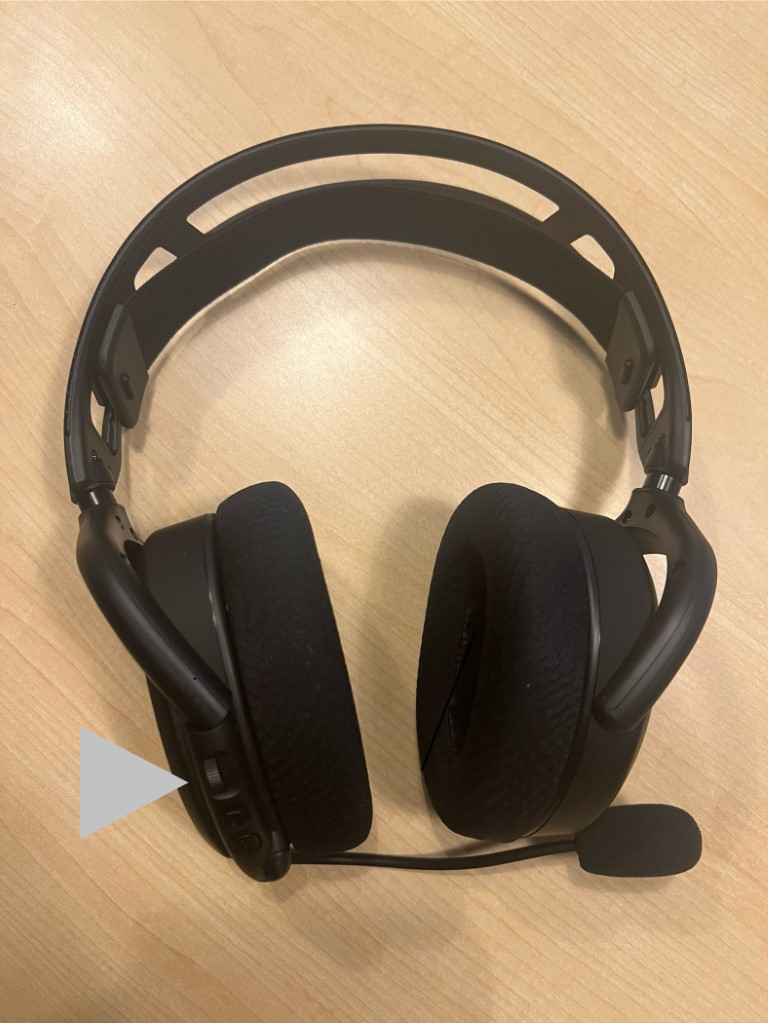
Leave a CommentThe other day I was searching for a headset which I could use for work and entertainment, when I came across the JVC gaming wireless GG-01W. This headset, with a few extra features, adds an extra layer of accessibility. This headset incorporates features which can be a game changer for people with visual impairment and for people with certain physical disabilities, however, these features can be useful for all.
Let’s play a design game. The task is to come up with the most accessible, most inclusive alarm clock.
I used to give this task to my classes when I was teaching at IBM, and we had the most thought provoking conversations.
There are no good or bad ideas here. But consider that the more inclusive you make it, the more features you add, the more expensive it will get, at some point it will be unreasonable. But the more you compromise on features, the less people will be able to use it.
Let me set one more rule here, it is a standalone clock. Anything it can do it is part of the clock you design. Otherwise, it would be easy to say that you will just connect to it using your phone and an app, which probably would be your most inclusive solution.
Leave a CommentIntroduction
As I described earlier, a museum’s accessibility is not a true or false, for that matter, it never will be, but it is a continuous progress towards inclusion and exceptional accessibility. But if you feel that your museum could be more accessible, there is quite a bit you can do. It will not be an overnight process, but there is a lot you can do right now, practically at no or minimal cost to get started.
Leave a CommentIntroduction
When planning a visit to a museum, one crucial question is often in the minds of many people with disabilities: Is this museum accessible? The significance of this question cannot be overstated. If a museum isn’t accessible, visiting it could turn out to be a frustrating, if not entirely wasted, experience. Conversely, if it is accessible but this information isn’t readily available, potential visitors might miss out on a wonderful opportunity.
It’s essential to understand that the accessibility of a museum is not a simple ‘yes’ or ‘no’ matter. Most museums fall somewhere in between.
Leave a CommentI often hear the argument that making something accessible for blind people is not worth it, because there aren’t many blind people using it. My argument usually is that if it was accessible, you would have more blind people taking advantage of it. It is even more difficult when we don’t just make something accessible by fulfilling the minimum necessary requirement, but making the environment truly inclusive to blind people, where they don’t only get information, but they can enjoy something just like sighted people do. Often, this can cost much more time and money.
In this article I would like to show you why inclusion is worth it, and how it can benefit many other clients, not only blind people. I am sure you have heard the arguments that accessibility is the law and it is our social and moral responsibility. This is true, but I would like to show you that it actually makes business sense.
Leave a CommentRecently I have come across a program in Ohio, which may fundamentally change what it means to create accessible travel and tourism in a state. Accessible Ohio has the potential to impact accessible experiences for people with disabilities by educating and consulting with companies who would like to make their services more accessible and inclusive. Of course, such services existed before, but here the difference is that it is taken to the state level, and actually funds accessibility consultations. As I understand, such an initiative is unique in the United States.
Leave a Comment